

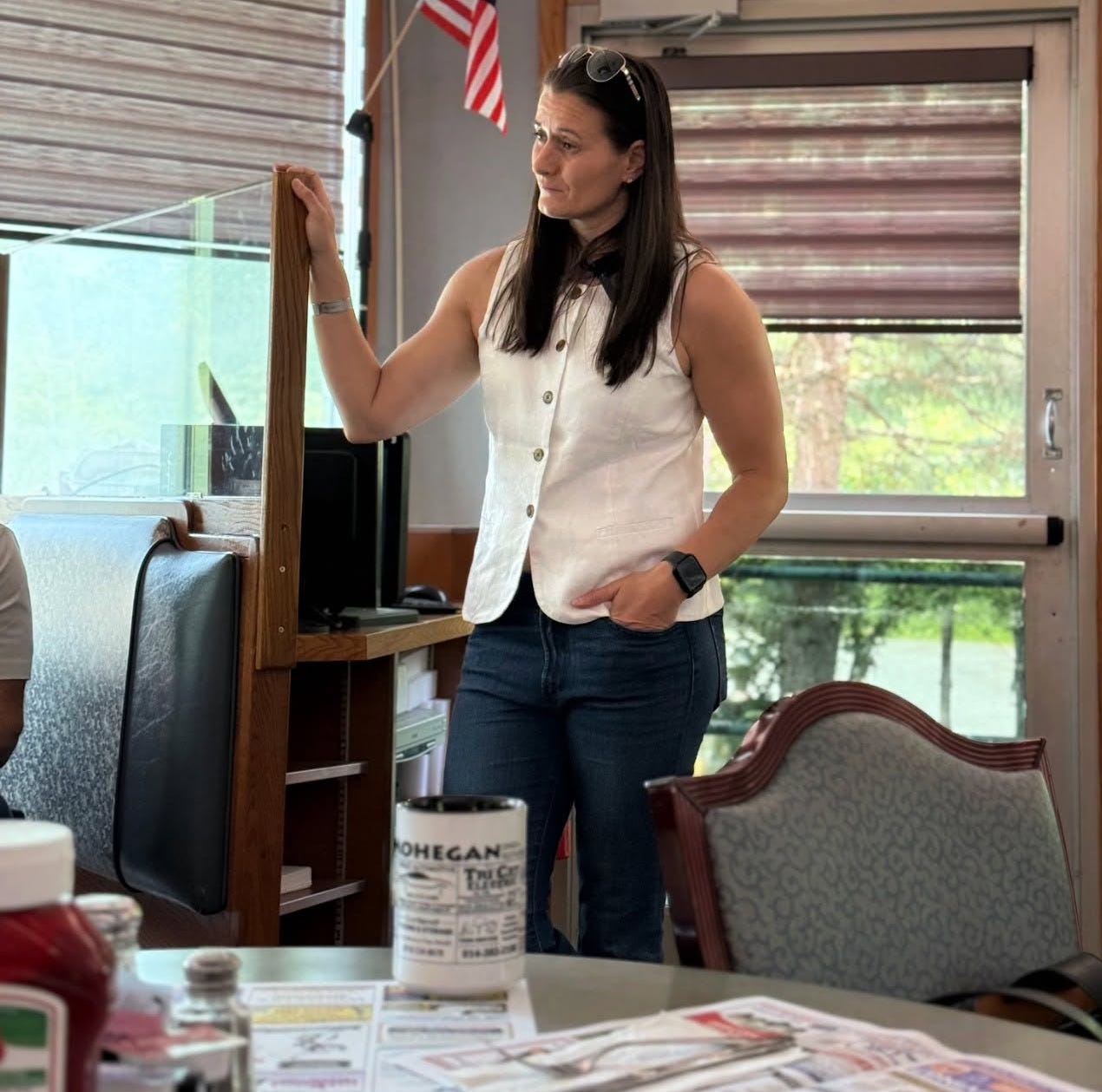
JUDGE ST — In the Democratic primary for New York’s 17th congressional district, Cait Conley has been fighting since February to quell concerns about her work for two AI companies that collaborate with Palantir—the tech giant assisting the federal government in its surveillance and deportation efforts.
Primer AI—which says on its website that it helps “support DHS missions with real-time monitoring, explainable analysis, and scalable workflows tailored to homeland security operations”—has paid Conley $35,000 in consulting fees since 2025, according to her most recent personal financial disclosure.

Conley is not required to disclose her salaries from other years, so it’s not clear when exactly their relationship began. Her campaign would not say.
But a review of publicly available information suggests Conley and Primer may have crossed paths before they put her on their payroll in 2025.
In April 2020, Primer recruited national security insiders to help expand its business with the federal government, and they found immediate success.
By October 2020, the firm had landed what was then its largest federal contract to date: a “multi-million-dollar” deal with the United States Special Operations Command, or SOCOM, and the US Air Force. And Conley, now a Primer employee, was working for SOCOM at the time.

Between 2018 and November 2021, according to her LinkedIn, Conley served as Director of Operations for the US Army Special Operations Command, which is housed under SOCOM.
“In partnership with the USAF and USSOCOM, Primer will develop the first machine learning platform capable of identifying and assessing the veracity of suspected disinformation,” a press release said on October 1, 2020. “It was previously impossible for machine learning solutions to effectively identify and extract claims, but by leveraging new approaches pioneered by Primer’s in-house natural language processing researchers, Primer aims to complete initial development of these platforms within the next 12 months.”
No other details about the 2020 contract are public. A press release announcing the deal said Primer would provide “a continuously updating dashboard” for operational commanders to monitor and fight disinformation.
In 2022, Primer received $3 million more in government funding to continue building on the work it had done for SOCOM. In the federal database of contracts, the transaction description is, “SOCIAL MEDIA EVENT MONITORING PRIMER AI.” But the body of the contract is not publicly available.
“By further enhancing the Primer counter-disinformation toolkit, Primer will complement capabilities developed under our Phase II 19.3 SBIR and ensure USSOCOM remains competitive in the I2O domain,” the 2022 contract’s abstract says. The “I2O” domain refers to Information and Influence Operations—SOCOM informational and computational warfare against US adversaries.
Spokespeople for Conley and Primer did not respond to questions for this article.
“The machines we’re building make sense of the world differently from us,” founder Sean Gourley said in 2017, when he announced Primer’s partnership with the CIA-affiliated investment firm In-Q-Tel.
“As humans, we have unavoidable cognitive limitations. We simply cannot read millions of pages per day to keep track of all the entities — the people, places, and things relevant to our missions — so we take shortcuts. We make hard choices with our limited attention to focus on what we assume to be the most important. What if we could read everything and pay attention to everything, all the time?”
By 2020, Primer was looking to rapidly grow its partnerships with government agencies. That April, it hired two national security experts to “strategically guide the direction and expansion of Primer’s product offerings to the world’s largest government agencies.” Sue Gordon had previously served as Deputy Director of National Intelligence under Trump, and Brett McGurk advised Presidents George Bush, Barack Obama, and Donald Trump.
“Awesome technology: Machine generated briefings—with maps, timelines, connections b/w people and organizations, key quotes, associated events—to immediately contextualize any breaking news. Puts a world-class analytical team inside my laptop,” McGurk tweeted on May 7, 2020. Less than five months later, Primer got its deal with SOCOM.
McGurk then left his job at Primer and went back to working for the federal government—securing a gig on the National Security Council as coordinator for the Middle East in January 2021. Cait Conley joined him a few months later, in April 2021, when she took over as Director of Counterterrorism, according to her LinkedIn.
“More than 20% of Primer’s employees have previously worked within the U.S. Department of Defense or Intelligence Community,” the firm boasted in 2020. Eventually, Conley became part of that statistic.
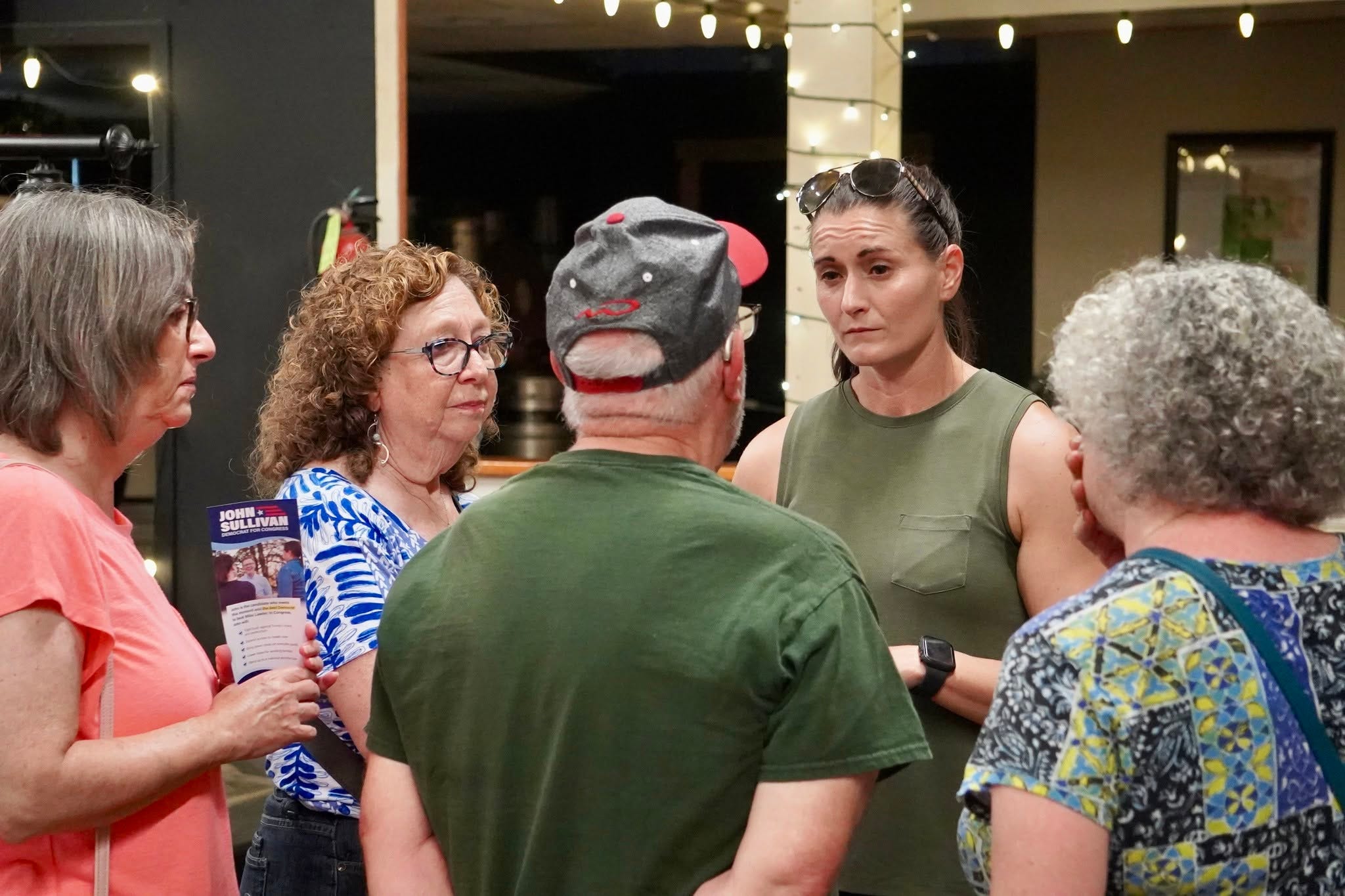
Throughout her campaign, Conley has spoken about her working-class roots, saying she doesn’t have millions in her bank account to self-fund. In February, she said she’s likely to go into debt because of her bid for Congress.
Last month, she told the Judge Street Journal she was too busy with campaigning to file an updated financial disclosure. After more questions from reporter David McKay Wilson and some public outcry on Facebook, she managed to find time in her schedule to do it. The new form revealed that Conley was being paid hundreds of thousands of dollars for her consulting work for the two AI companies.
The $35,000 from Primer—along with nearly $300,000 from another firm, Hidden Level—have been her only sources of income, allowing her to pay for her homes in Ossining and North Carolina while she focuses on her congressional campaign.
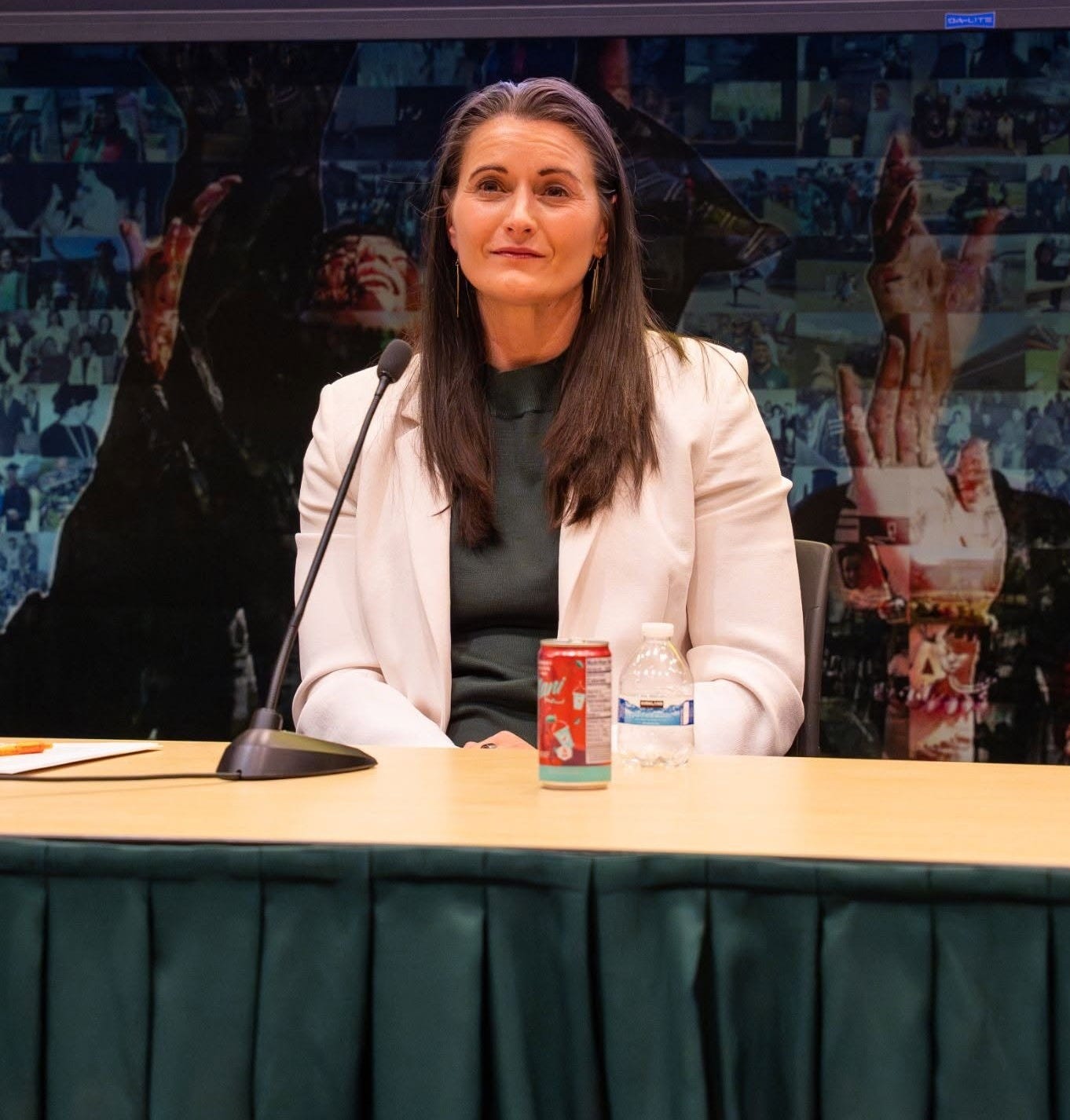
The nature of Conley’s work for Primer remains unclear. She told voters four months ago that she signed nondisclosure agreements and cannot speak publicly about it
Whenever it comes up, Conley defaults to the same explanation about helping to keep people safe from terrorist attacks at live sports events—an apparent reference to some of Hidden Level’s work. But she does not appear to have ever spoken publicly about her work for Primer.
If Conley wins the primary and then the general election in November, she’ll get a say in regulating the very AI companies that have been paying her hundreds of thousands of dollars in the last year and a half.
Until then, Primer and Hidden Level can give her as much money as they want—and none of it is subject to campaign finance restrictions.
/////
Author’s note: I have dedicated the last six months to covering the NY-17 Democratic primary. If you’ve appreciated it and would like to see more coverage in the general election, consider signing up for a paid subscription. This has been fun, but the future of the Judge Street Journal depends on readers like you.
And keep an eye out for our new episode of Judgement Call out tomorrow!
Thank you for your reporting.
https://www.linkedin.com/posts/the-economist_ai-is-less-regulated-than-a-sandwich-shop-ugcPost-7471139255113719810-Sbav?utm_medium=ios_app&rcm=ACoAAAHPnXwBeSeUYOoFcJe5IiO6uagMcIeHNVU&utm_source=social_share_video_v2&utm_campaign=copy_link